.svg)


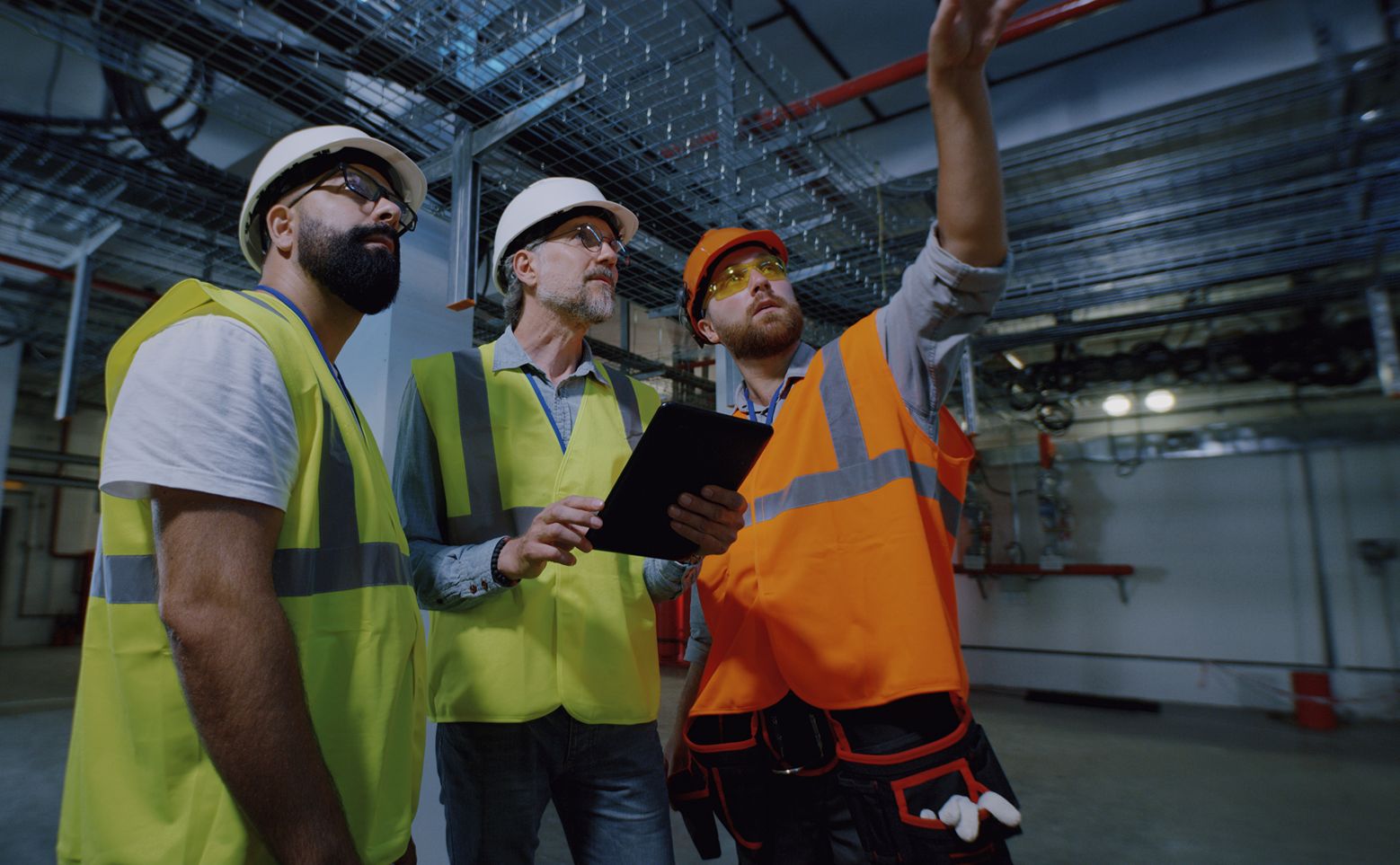
Data center growth is pushing project teams to move faster, but infrastructure cannot scale without the right people in place. Every phase depends on specialized talent, from construction and engineering to power, commissioning, and operations. For companies building the next generation of AI infrastructure, access to that talent is quickly becoming one of the clearest competitive advantages.
For project teams, the challenge is speed and precision. They need qualified people who understand technical environments, tight timelines, and complex handoffs. When hiring starts too late, talent gaps can quickly become schedule risk. In our experience, the most successful teams do not treat staffing as a final step in the process. They build talent access into the project strategy from the beginning.
What’s Driving Data Center Growth?
Data center expansion is being shaped by several forces at once:
- AI workloads are increasing compute intensity
- Cloud and enterprise infrastructure needs continue to grow
- Companies are investing in automation, cybersecurity, advanced analytics, and digital transformation
Together, these trends are increasing demand for facilities that can support higher power density, more advanced cooling systems, and stronger energy strategies.
The International Energy Agency projects that data center electricity consumption will more than double globally by 2030, reaching around 945 TWh. The IEA also reports that data center electricity consumption is growing far faster than total electricity demand from other sectors, driven in large part by AI and digital infrastructure expansion.
That growth creates a practical challenge for the companies responsible for delivering new capacity. Data centers require capital, land, equipment, and utility access. They also require people who understand complex technical environments. Construction leaders, engineers, utility specialists, commissioning teams, and critical facilities professionals all play a role in moving a project from planning to operation.
In our view, the challenge is not only that more data centers are being built. It is that many of these projects are competing for the same talent at the same time. AI data center demand is accelerating faster than many workforce pipelines can support, which means hiring strategy now has a direct impact on project delivery.
Data Center Growth Depends on Power
Data center growth is directly tied to power availability. As AI workloads expand, the energy demands behind data centers are becoming a central business issue.
The U.S. Department of Energy reported that data center load growth has tripled over the past decade and is projected to double or triple by 2028. That increase adds pressure to a power landscape already focused on grid modernization, capacity expansion, reliability, electrification, and industrial growth.
This creates a broader workforce challenge. Data centers need reliable power, but the industries responsible for delivering that power are also competing for specialized talent. Utilities, power providers, EPC firms, infrastructure developers, manufacturers, and data center operators often need many of the same skill sets.
As a result, the talent required for data center expansion extends beyond traditional facility roles. It includes professionals with experience in:
- Power systems
- Substations
- Protection and controls
- Transmission
- Distribution
- Nuclear-adjacent operations
- Natural gas
- Renewable energy
- Utility-scale infrastructure
For project teams, this makes workforce planning more complex. The right people may not come only from the data center industry. They may come from adjacent sectors where critical infrastructure, power reliability, and technical execution are already part of the work.
That is where a specialized data center staffing strategy becomes important. A broader view of the talent market can help companies identify qualified professionals from utilities, power generation, industrial construction, manufacturing, and other infrastructure-heavy environments where similar skills are already being applied.
Why Talent Availability Is Becoming the Real Bottleneck
Schedule pressure in data center development is often tied to permitting, equipment lead times, supply chain constraints, utility coordination, and interconnection timelines. Those challenges are real, but talent availability is increasingly part of the same conversation.
A project can have funding, plans, and equipment on order, but still lose momentum if the right people are not available when needed. Roles remaining open at critical moments can slow:
- Design reviews
- Field execution
- Vendor coordination
- Commissioning
- Documentation
The labor shortage is especially difficult because data center projects require people who can work in technical, fast-moving, highly coordinated environments. These are not always roles that can be filled through broad, generalist recruiting. Many require experience in mission-critical facilities, industrial construction, utilities, controls, mechanical systems, electrical infrastructure, safety, QA/QC, or commissioning.
That creates a data center talent shortage that is both technical and timing-driven. Companies need specialized people, and they need them at specific points in the project lifecycle. When hiring starts too late, staffing gaps can quickly become schedule risk.
In our experience, organizations feel the talent shortage most when hiring is treated as a reaction to an immediate opening instead of part of the project plan. By the time a role becomes urgent, the candidate pool may be limited, internal teams may already be stretched, and key project dependencies may already be affected.
For many data center projects, the issue is not simply whether talent exists. It is whether the right people can be identified, vetted, and deployed at the exact point in the project when their expertise is needed most. That is why data center recruitment must be aligned with the project schedule, not separated from it.
The Specialized Talent Needed to Keep Data Center Projects Moving
Data center projects depend on connected skill sets across the full lifecycle. A gap in one area can affect the next phase of work, especially when teams need to coordinate around aggressive timelines.
Construction and Field Execution Talent
Construction and field execution roles help move projects from plan to build. These roles keep budgets, subcontractors, site activity, safety, documentation, and quality standards aligned as projects move from planning into the field.
The U.S. Bureau of Labor Statistics projects construction manager employment to grow 9% from 2024 to 2034, much faster than the average for all occupations.
For data center teams, that means construction leadership is already in demand across the broader market. As more projects move forward, competition for experienced field and project delivery talent will remain high.
This is where speed and specialization matter. Project teams need construction talent that can step into complex environments, understand site priorities quickly, and help keep work moving without adding unnecessary ramp-up time.
Engineering and Technical Design Talent
Engineering talent is critical to data center planning, design, construction, and operational readiness. These professionals help ensure that power, cooling, controls, automation, and infrastructure systems are designed to support reliability from the start.
This is where the engineering talent shortage becomes especially important. Data centers require precision, redundancy, uptime, and coordination across complex systems. For employers, the challenge goes beyond finding engineers with the right credentials, and into finding people who truly understand the pace, dependencies, and expectations of critical infrastructure work.
When engineering roles remain open, the impact can ripple across planning, design review, procurement, construction sequencing, and commissioning. A strong data center recruitment partner can help teams look beyond job titles and evaluate whether a candidate’s background aligns with the technical environment, project phase, and delivery expectations.
Utility, Power, and Grid Talent
Power is one of the biggest constraints shaping data center expansion. Before a facility can operate, teams need to solve for utility coordination, interconnection, grid capacity, and the infrastructure required to support long-term demand.
That creates a need for talent with experience in utility and power environments, including substations, transmission, distribution, protection and controls, and power generation. These professionals help connect facility development with the energy systems required to support reliable operations.
As utilities restart, expand, and modernize power infrastructure, the competition for this talent will only increase. Data center operators, EPC firms, utilities, and energy providers are often looking for similar expertise at the same time, making early workforce planning even more important.
Commissioning and Turnover Talent
Commissioning is one of the most important phases in data center delivery. It is where systems are tested, validated, documented, and prepared for operation.
The right commissioning talent helps confirm that critical systems work as intended before the facility goes live. When those professionals are not available at the right time, project teams can face delays close to the finish line, affecting turnover, operations, and client confidence.
Commissioning also requires people who can work across teams, understand dependencies, document findings clearly, and support a smooth handoff from construction to operations. In a high-pressure environment, those skills are difficult to replace at the last minute.
Operations and Critical Facilities Talent
Data center growth does not end when construction is complete. Once a facility is live, operations teams help maintain uptime, reliability, safety, and performance.
These roles require discipline, technical knowledge, and experience working in environments where downtime is not an option. From routine maintenance to emergency response, critical facilities talent helps protect the long-term performance of complex infrastructure.
For operators scaling across multiple locations, the challenge becomes even greater. They need consistent access to talent that can support reliability today while helping the organization prepare for continued growth.
Why Traditional Hiring Models Can Fall Short
Data center project demands can change quickly, which makes it important to match the hiring model to the need. For long-term leadership, specialized expertise, and business-critical roles, permanent placement can be a powerful way to build stability and retain knowledge within the organization. When companies are selective about who they bring onto the team, direct hire services can help them find candidates who are aligned with both the role and the long-term direction of the business.
At the same time, many project teams also need qualified people quickly for contract, project-based, contract-to-hire, or urgent roles. They may need support for a single site, multiple locations, a specific phase of work, or a short-term surge in demand.
That is where specialized data center recruitment becomes important. The right approach is not about choosing one model over another. It is about understanding the technical environment, schedule, location, project phase, and team structure so each hiring decision supports the broader delivery strategy.
Delayed hiring decisions can affect schedules, budgets, vendor coordination, internal team workload, and overall project confidence. When teams are already managing power constraints, supply chain pressure, and shifting timelines, staffing gaps can make an already complex environment harder to manage.
A specialized staffing approach gives companies more flexibility. Instead of relying on one hiring model, organizations can use contract, contract-to-hire, permanent placement, project-based support, or scalable staffing solutions depending on the role, timeline, and business need. That flexibility is especially important in a market where project requirements can shift quickly.
Why Talent Access Needs to Be Part of Project Strategy
Talent access should be part of project strategy from the beginning. A strong staffing plan looks beyond the role that needs to be filled today and considers what skills will be needed next.
Planning affects construction. Construction affects commissioning. Commissioning affects turnover. Turnover affects operations. Each phase depends on the phase before it, which means workforce planning should account for the full project lifecycle.
Early planning gives companies more room to adjust. It allows teams to identify likely shortage areas, evaluate which roles may need contract or project-based support, and consider adjacent industries that can expand the candidate pool. Talent from utilities, power generation, industrial construction, manufacturing, infrastructure, and mission-critical environments can often bring relevant experience to data center work.
This is where a specialized staffing partner can help. By understanding the skills needed at each phase, where gaps are likely to occur, and how project timelines shape hiring needs, a partner can help organizations move faster without sacrificing fit.
A staffing partner’s job is not to simply fill jobs. It is to support delivery.
At The Planet Group, we see this as a workforce planning challenge as much as a recruiting challenge. The right partner should help clients understand where talent shortages are likely to affect the schedule, which adjacent skill sets may be transferable, and how to build a flexible staffing strategy that keeps critical work moving.
Growth Requires More Than Technical Talent
Data center growth requires more than technical hiring. As operators expand across regions, sites, and project phases, the business functions supporting that growth need to scale as well. The fastest-growing data center operators aren’t just solving for technical talent. They are ensuring finance and HR can scale alongside infrastructure.
Finance teams play a critical role in capital allocation, ROI modeling, cost management, and investment planning. HR teams help support regional expansion, workforce planning, compliance, onboarding, and the organizational structure needed to grow without creating new bottlenecks.
For companies building or operating data centers, that means talent strategy should extend beyond field, engineering, power, and operations roles. The strongest growth plans also account for the finance and HR infrastructure needed to support expansion at scale.
This is especially important as companies evaluate new markets, expand project portfolios, and balance growth with cost discipline. Technical teams may build and operate the infrastructure, but finance and HR teams help determine how quickly, efficiently, and sustainably that growth can happen.
For data center operators, EPC firms, utilities, and infrastructure companies, this creates a broader talent question: do we have the people in place to support both project execution and business expansion? When the answer is no, growth can stall in areas that are not always visible on the construction schedule.
The Competitive Advantage Is Talent Readiness
The organizations that treat staffing as part of project strategy will be better prepared to compete for specialized talent, respond to schedule pressure, and adjust when project needs change. Those that wait until roles become urgent may face a smaller candidate pool and greater delivery risk.
As AI infrastructure expands and data center development accelerates, talent readiness will become one of the clearest differentiators between teams that can keep work moving and teams that fall behind.
Talent readiness does not mean having every hire made before a project begins. It means knowing which roles are likely to become difficult to fill, where specialized experience is most critical, and how to access qualified people quickly when project needs change.
That readiness is especially valuable in a market shaped by AI infrastructure demand, power constraints, supply chain pressure, and a persistent data center talent shortage. Companies that plan for talent early will be better positioned to protect schedules, reduce internal strain, and keep projects moving through each phase of delivery.
How The Planet Group Supports Data Center Staffing Needs
The Planet Group helps construction, EPC, utility, and data center teams access specialized talent across technical, engineering, construction, power, commissioning, and operations roles. Our approach is built around speed, specialization, reliability, and flexibility.
When project timelines are tight, speed matters. We help organizations connect with pre-vetted, specialized talent for urgent needs, project-based work, contract roles, and hard-to-fill positions. That speed can be especially valuable when internal teams are stretched or when a project cannot afford a long hiring cycle.
And because every project is different, The Planet Group offers flexible staffing models, U.S.-based delivery, and global support options where appropriate, allowing clients to align staffing with project needs.
Build the Workforce Behind Data Center Growth
Data center growth depends on more than investment. It depends on the specialized people who can build, power, commission, and operate the infrastructure behind AI, cloud, and digital transformation.
The Planet Group helps construction, EPC, utility, and data center teams find the talent they need to keep critical work moving. From engineering and construction to power, commissioning, and operations, we help organizations respond quickly to staffing needs without losing sight of technical fit, project timing, and long-term delivery goals.