.svg)


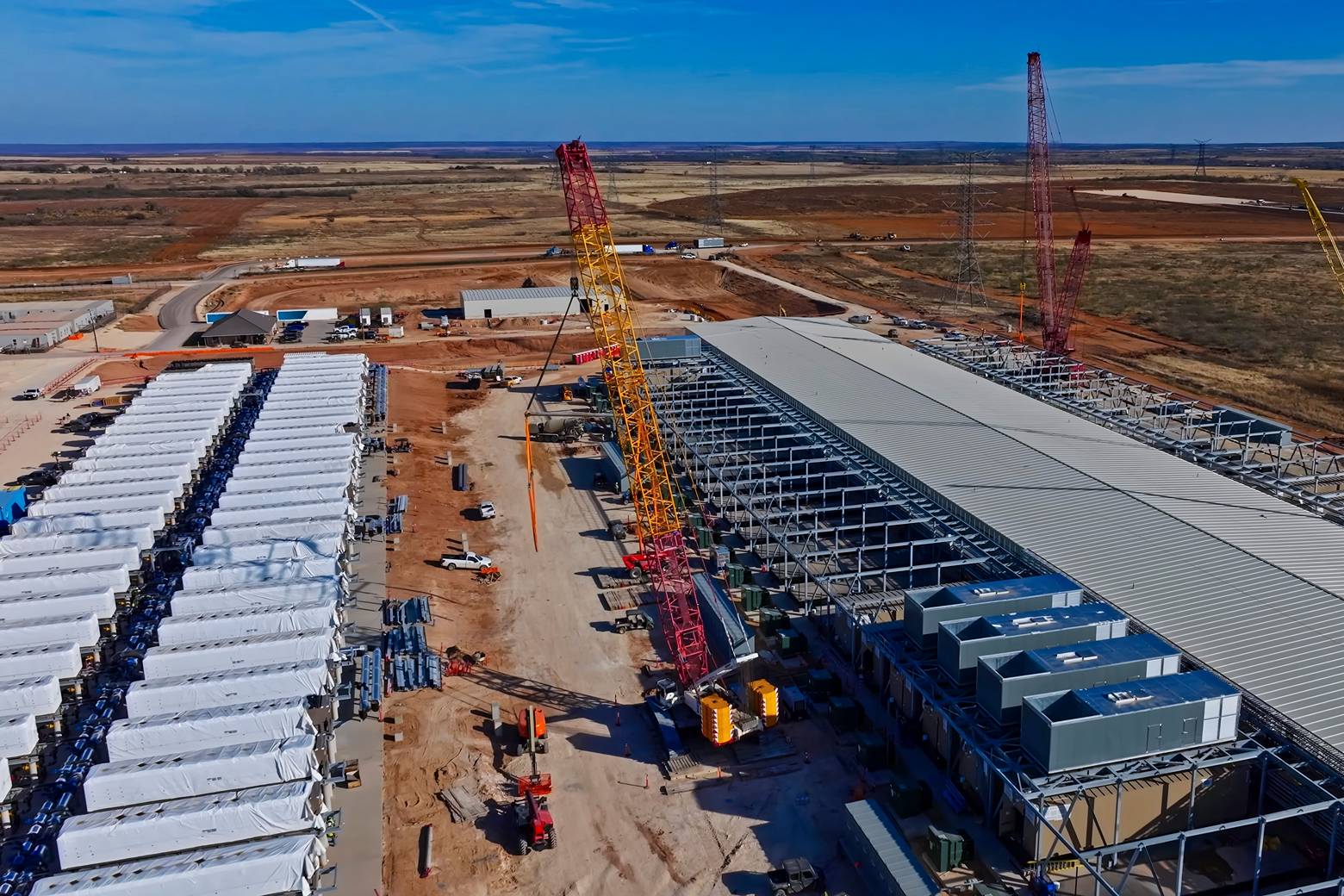
Ask most people what data center construction involves, and they'll picture steel beams, server racks, and rows of cooling units. That picture only covers the surface.
Behind every hyperscale campus sits a web of industries working in lockstep long before the first concrete pour. There are nuclear engineers negotiating power purchase agreements, manufacturers producing switchgear and transformers on backlogged production lines, and utility crews racing to bring new power generation online.
Data center construction has become one of the most interconnected undertakings in the modern era. For employers, that means staffing a project touches far more than construction trades alone. For job seekers, it means skills built in energy, manufacturing, or nuclear work often translate directly, even if "data center" has never appeared in your job title.
Data Center Construction Doesn't Happen in a Vacuum
The scale of today's buildout explains why so many industries are getting pulled in at once.
The Scale of the Problem
The pace of data center development right now is hard to overstate. Goldman Sachs Research projects US data center power demand will roughly double, climbing from 31 gigawatts in 2025 to 66 gigawatts in 2027. That kind of growth touches nearly every industry tied to electricity, construction, and heavy equipment.
Why One Industry Can't Do It Alone
Growth at that scale depends on energy producers, equipment manufacturers, and a skilled trades workforce large enough to put it together on schedule. Every one of those industries is short on people right now, which is why data center construction has become as much a staffing challenge as an engineering one.
The Skilled Trades Behind Every Build
Every project starts with skilled people on the ground, and right now there aren't enough of them.
A Widening Labor Gap
Long before a data center goes live, it needs electricians, HVAC technicians, mechanical pipefitters, and commissioning engineers on-site, often for years at a stretch. The construction industry needs an estimated 349,000 net new workers in 2026 alone, a figure rising to 456,000 in 2027, according to the Associated Builders and Contractors, and data center projects compete directly with every other major infrastructure build for that same shrinking pool of tradespeople.
What This Means for Employers & Candidates
Electricians in particular have become the bottleneck. Fortune reported that Microsoft has had electricians commuting as far as 75 miles to job sites, or relocating temporarily, to keep crews staffed, and that Oracle pushed back a data center completion date from 2027 to 2028 in part due to labor shortages on its OpenAI-linked builds. For organizations, that gap is worth treating as a fixed part of your timeline, not a mid-project surprise. For candidates in the trades, it's a sign that experience on mission-critical, high-density construction sites is in unusually high demand right now.
Why Energy Jobs Are the Other Half of the Equation
Construction crews can only build what the grid can actually power.
Power Demand Is Outpacing Supply
None of this matters if the power isn't there to run it. US utilities have unveiled a combined $1.4 trillion in capital spending plans through 2030, with data centers cited as a top driver of that new generation, transmission, and grid capacity.
A Shared Labor Pool with Power Companies
That buildout is driving a parallel hiring wave in energy jobs: line workers, power plant operators, grid engineers, and project managers who can move fast enough to match data center timelines. In practice, many of these roles draw from the same limited talent pool as data center construction itself, which means energy companies and developers are often competing for the same candidates rather than filling separate needs. Explore our Energy Jobs Report for a closer look at where that demand is concentrated.
Nuclear Jobs and the Staffing Race Behind Them
Nuclear has become one of the fastest-growing pieces of the data center power puzzle, and its workforce is scrambling to keep up.
The Hyperscaler Nuclear Rush
Nuclear has become a preferred solution for operators chasing reliable, round-the-clock electricity, and hyperscalers have moved fast to lock it in. Meta has committed to securing up to 6.6 gigawatts of nuclear power by 2035, Microsoft is bringing a shuttered reactor back online, and Google and Amazon have both signed early-stage agreements with small modular reactor developers. Behind every deal sits a workforce question.
A Workforce That Can't Keep Up
The nuclear energy sector employed roughly 67,900 workers in 2024, and the Department of Energy's latest US Energy & Employment Report found employers anticipating a 9.2% increase in the nuclear construction workforce, even before newer federal policy aimed at expanding domestic nuclear capacity took effect.
The Nuclear Energy Staffing Challenge
Demand for licensed operators, health physicists, and construction trades with nuclear experience is rising faster than the pipeline of qualified nuclear jobs candidates can fill, particularly with new reactor licensing reviews still targeting roughly 18 months even under recent federal efforts to speed up the Nuclear Regulatory Commission's process. Nuclear energy staffing has quietly become one of the tightest, most overlooked specialties in the data center ecosystem.
For employers, that means starting the search well ahead of a typical construction timeline, since qualified nuclear talent is rarely available on short notice. For professionals with plant operations or nuclear engineering experience, it means unusually strong leverage in a market that badly needs what you already know how to do. Read our Nuclear Jobs Report to see how that demand is playing out across current openings.
Manufacturing Jobs and the Data Center Supply Chain
None of this gets built without the equipment behind it, and that equipment has its own labor problem.
A Supply Chain Built on Specialized Components
Every data center is, in a real sense, an assembly of specialized manufactured components: semiconductor chips, switchgear, transformers, generators, and cooling systems, most produced in a small number of facilities with limited spare capacity. Rabobank's research into the data center supply chain notes that because these components share critical inputs and suppliers, a shortage in one area cascades rather than stays contained, extending lead times and inflating costs before equipment ever reaches a job site.
The Manufacturing Talent Gap
Filling manufacturing jobs fast enough to keep that supply chain moving is its own challenge. Manufacturers across the electrical equipment, semiconductor, and heavy machinery space are reporting the same story: too few skilled workers to meet demand, and lead times that stretch even longer as a result.
For candidates with a manufacturing background, that shortage means real opportunity across an expanding set of employers who may not obviously connect to data centers on the surface.
For organizations, it means sourcing manufacturing talent early, often before a single piece of equipment is scheduled to ship.
One Shared Talent Pool
The throughline across every industry above is that they're all drawing from an overlapping, shrinking talent pool. The same electricians, engineers, technicians, and project managers who could staff a utility-scale power project are often qualified for data center construction roles, and vice versa.
For employuers, that means the smartest sourcing strategies look across adjacent industries rather than searching within construction alone. For candidates, it means experience in energy, nuclear, or manufacturing work is rarely as far from data centers as it may seem. That overlap is why data center construction can't be staffed one industry at a time: a single project timeline depends on nuclear, energy, manufacturing, and skilled trades talent all being available at once, not in sequence.
Building the Team Behind the Build
Whether you're an organization staffing a multi-year data center construction project or a candidate deciding where your background fits, the takeaway is the same: this industry rewards those who understand how these pieces connect. A background in nuclear operations, grid engineering, industrial manufacturing, or specialized trades has a place in data center development, often in ways that aren't obvious from a job title alone.
Talk to a data center staffing specialist about available candidates or available jobs. Contact us to see where you fit into the industries building the infrastructure behind AI.